2026 Best Embedded Systems Innovations and Trends to Watch?
The landscape of embedded systems is rapidly evolving. By 2026, we expect significant innovations that redefine technology as we know it. Embedded systems drive many devices, from smartphones to industrial machines. As we look ahead, several trends emerge that are worth monitoring.
One major trend is the integration of artificial intelligence. Embedded systems will become smarter, offering real-time data processing. This can enhance decision-making in various applications, such as healthcare and automotive sectors. Another exciting development is the shift towards more energy-efficient designs. Sustainable technology is crucial, especially with growing environmental concerns.
However, challenges remain. The complexity of these systems can lead to vulnerabilities. As we embrace innovation, it is vital to prioritize security in embedded systems. Moreover, keeping up with the fast pace of change can be difficult for developers and companies alike. As we explore these innovations, reflection on the consequences and responsibilities of technology will be crucial.
Emerging Technologies in Embedded Systems for 2026
The embedded systems landscape is rapidly evolving. In 2026, emerging technologies will significantly shape this field. According to a recent report, the global embedded systems market is projected to reach $300 billion by 2026. This surge indicates a growing reliance on intelligent devices across various industries.
One notable trend is the rise of artificial intelligence (AI) in embedded systems. AI integration is expected to improve efficiency and decision-making. For instance, smart home devices utilize AI for personalized user experiences. However, challenges remain. Developers must ensure that these systems are secure against potential cyber threats. A report by cybersecurity experts reveals that 30% of IoT devices lack adequate protection.
Another area of focus is the Internet of Things (IoT). By 2026, there will be over 75 billion connected devices. This connectivity will lead to increased data management complexities. Companies must tackle the intricacies of handling vast amounts of data. Many embedded systems may struggle without optimized processing capabilities. Thus, strategic advancements are necessary to harness the full potential of IoT in embedded systems.
Key Trends Shaping the Future of Embedded Systems
Embedded systems are evolving rapidly, driven by key trends that will shape the future. The global embedded systems market is projected to surpass $200 billion by 2026, reflecting a growing demand. This growth is fueled by advancements in artificial intelligence and machine learning. Integrating these technologies into embedded systems will enhance their efficiency and capabilities.
Connectivity remains crucial. The rise of the Internet of Things (IoT) has led to increased interconnectivity among devices. A recent industry report states that the number of IoT devices is expected to reach 30 billion by 2025. This surge presents opportunities but also challenges in data management and security. Many systems lack adequate protection against cyber threats, raising concerns among developers.
Sustainability is becoming a priority. There's growing pressure to develop energy-efficient embedded systems. Reports indicate that energy consumption in embedded devices could account for 60% of total power usage in smart homes. Striking a balance between performance and energy efficiency is increasingly complex. Designers need to reconsider their strategies to achieve a more sustainable future.
Innovative Hardware Developments in Embedded Systems
Innovative hardware developments are shaping the future of embedded systems. Emerging technologies like edge computing are transforming data processing. According to a recent industry report, the embedded system market will reach approximately $161 billion by 2026. This growth is driven by advancements in IoT devices and smart appliances. Their integration into daily life is more prevalent than ever.
Microcontrollers are becoming smaller and more efficient. New materials are improving performance while reducing power consumption. For instance, advanced semiconductor technologies are enabling faster processing speeds. A study indicates that devices with improved chipsets can enhance functionality by up to 30%. Yet, challenges exist; many developers struggle with software optimization alongside hardware upgrades.
As systems grow more complex, security cannot be overlooked. Innovations in hardware security modules are critical for protecting sensitive data. However, the cost of implementing these technologies can be high. Many companies need to weigh the risks against the benefits. The rapid pace of innovation poses a dilemma: keeping up with developments while ensuring reliability and security. This balancing act will be crucial in the coming years.
2026 Best Embedded Systems Innovations and Trends to Watch
| Innovation |
Description |
Trend |
Impact on Industry |
Projected Growth |
| AI Integration |
Embedding AI algorithms into systems for smarter decision-making. |
Increasing reliance on AI |
Enhanced automation and efficiency in various sectors. |
15% CAGR by 2026 |
| 5G Connectivity |
Deployment of 5G technology for faster data transmission. |
Expansion of IoT applications |
Facilitates real-time data processing in embedded systems. |
20% CAGR by 2026 |
| Low-Power Devices |
Development of energy-efficient embedded systems. |
Sustainability and efficiency |
Reduction in power consumption across devices. |
12% CAGR by 2026 |
| Edge Computing |
Processing data closer to the source for lower latency. |
Growing demand for faster response times |
Improved performance for real-time applications. |
18% CAGR by 2026 |
| Security Enhancements |
New measures to protect against security threats. |
Increased focus on cybersecurity |
Safeguarding critical data and infrastructure. |
10% CAGR by 2026 |
Software Advancements Driving Embedded System Efficiency
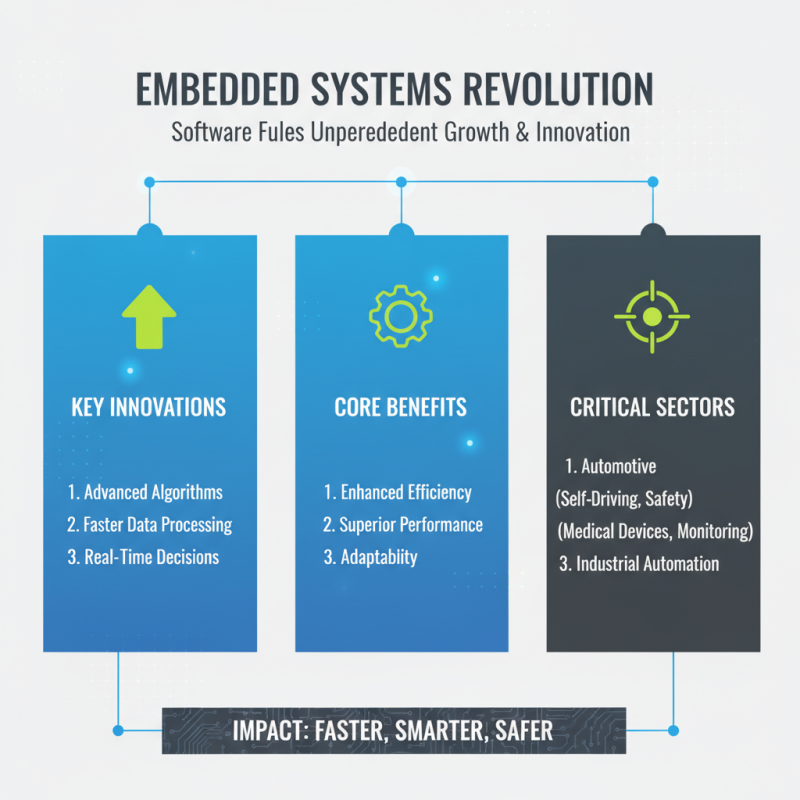
The embedded systems industry is witnessing explosive growth, driven largely by remarkable software advancements. These innovations focus on enhancing efficiency, performance, and adaptability in various applications. For instance, new algorithms are streamlining data processing, enabling faster decision-making for real-time applications. This trend is crucial in sectors like automotive and healthcare, where rapid responses can save lives.
Developers are increasingly utilizing machine learning to improve embedded systems. For example, predictive maintenance systems can forecast failures before they occur. This shift not only saves resources but also extends the lifespan of devices. Yet, integrating such complex software can lead to unforeseen challenges. Issues like compatibility and security must be closely monitored.
Moreover, the rise of open-source platforms is reshaping the landscape. They offer flexibility and foster collaboration among developers. However, this decentralization sometimes results in inconsistency in software quality. It raises questions about reliability and support. As the industry moves forward, addressing these imperfections will be critical for sustainable progress.
Integration of AI and Machine Learning in Embedded Devices
The integration of AI and machine learning in embedded systems is transforming industries. In 2023, approximately 35% of devices utilized AI capabilities, and this number is expected to surpass 50% by 2025. This rapid growth indicates a significant shift in how embedded devices operate. These systems now analyze data in real time, making decisions faster than human operators.
However, not all implementations are seamless. Challenges persist in optimizing algorithms for specific hardware constraints. Limited processing power often restricts the complexity of AI models that can be deployed. For instance, some devices struggle to manage power consumption while delivering AI capabilities. Developers must balance performance and efficiency, leading to a need for better tools and frameworks.
In practical applications, the results can be mixed. For instance, smart home systems may misinterpret user commands due to inadequate training data. This may lead to frustrating user experiences. Industries are learning that real-world integration requires careful consideration of context and environment. As AI capabilities grow within embedded systems, so does the need for constant refinement and adaptation.