10 Best Software Engineering Practices for Efficient Development?
In the fast-paced world of software engineering, efficiency is paramount. Teams often face pressure to deliver high-quality solutions quickly. However, achieving this goal is not always straightforward. Developers must navigate complex challenges like tight deadlines and evolving project requirements. This complexity can lead to mistakes that may ultimately slow progress.
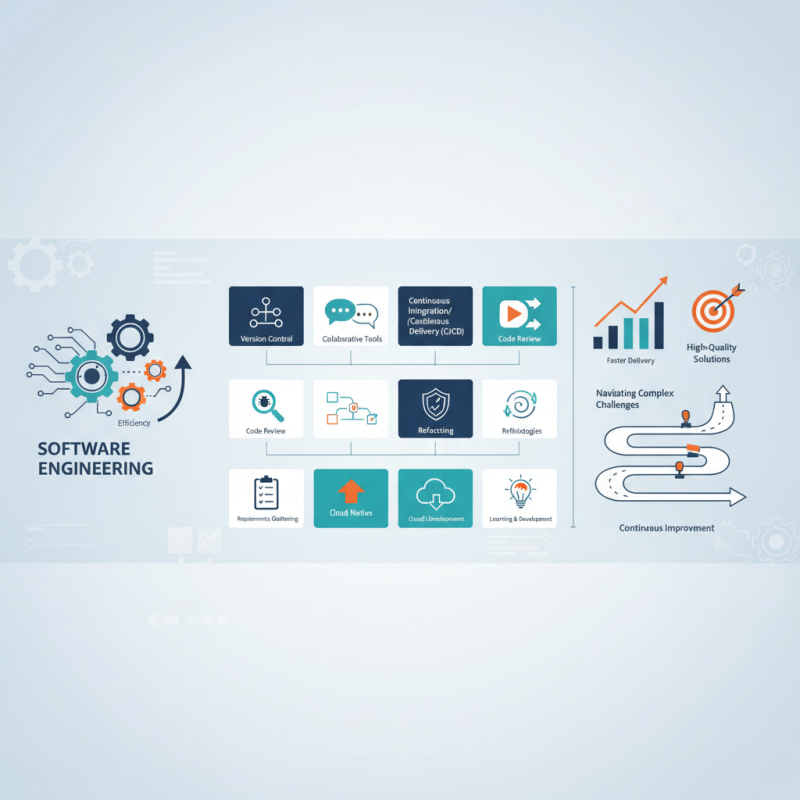
To address these challenges, certain best practices are essential. Implementing these practices can significantly enhance development efficiency. For instance, adopting version control systems allows teams to track changes seamlessly. Collaborative tools foster better communication among team members, ensuring everyone stays aligned. Yet, even the best practices come with their own pitfalls. Teams may struggle to fully integrate these methodologies, leading to inconsistent results.
Reflecting on these dynamics is crucial. By analyzing what works and what doesn't, developers can refine their processes. Embracing a culture of continuous improvement will foster innovation. The following sections will explore ten key software engineering practices designed to boost efficiency. These strategies aim to empower teams to navigate the complexities of modern development.
Essential Principles of Software Engineering for Optimal Development
Effective software development relies heavily on essential principles of software engineering. These principles guide teams in creating efficient, maintainable, and scalable software. Clear documentation is crucial. It helps both current and future teams understand the project's purpose and structure. Without it, crucial details can be lost.
Another important aspect is modular design. Breaking down systems into smaller, manageable parts allows for easier updates and testing. This practice also promotes parallel development. Teams can work on different modules simultaneously, speeding up the overall process. However, it can lead to integration challenges. If modules are not well defined, merging them may create conflicts.
Regular code reviews are vital. They foster collaboration and knowledge sharing among team members. This practice can identify bugs early in the development cycle. Yet, it is common for feedback to be ignored. Developers might feel defensive about their work. Open communication is essential to address this issue. Encouragement and constructive criticism can create a positive team dynamic. By focusing on these principles, teams can strive for continuous improvement in their development processes.
Understanding Code Readability and Maintainability in Software Projects
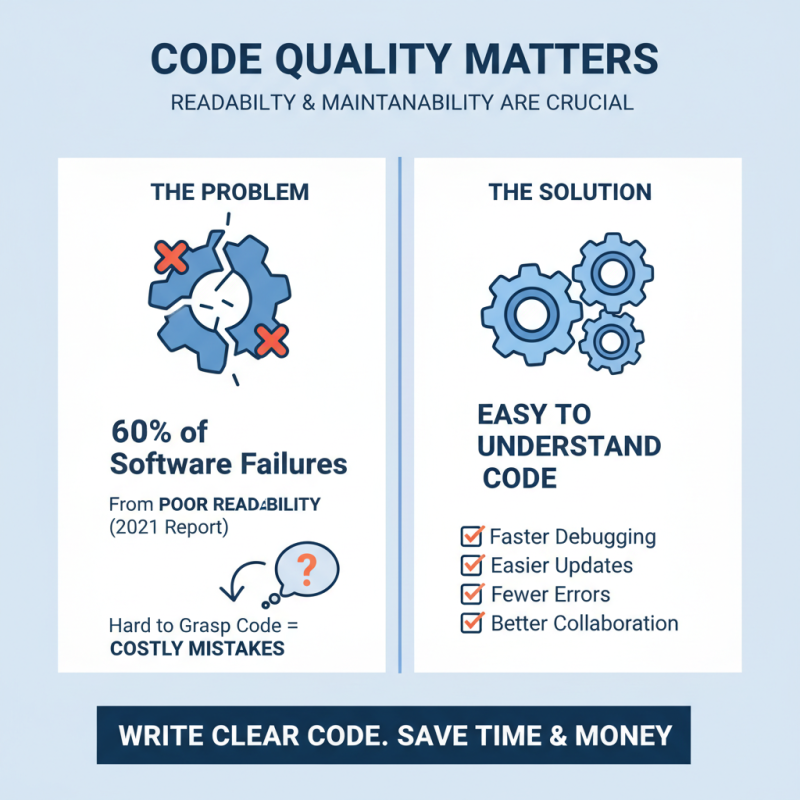
Code readability and maintainability are crucial in software development. According to a 2021 report by the International Journal of Software Engineering, 60% of software failures arise from poor readability. Developers must ensure that code is understandable at a glance. If developers struggle to grasp the code quickly, it could lead to costly mistakes.
Using clear variable names, proper indentation, and comments helps enhance readability. Studies show that maintainable code reduces the time spent on updates by up to 50%. Yet, many teams overlook this aspect. They focus solely on functionality. This narrow approach can result in a tangled mess, making future changes tedious. Refactoring efforts often reveal underlying issues that should have been addressed earlier.
Regular code reviews can significantly improve maintainability. Research indicates that teams who engage in bi-weekly reviews report 30% fewer bugs in later stages. However, not all teams prioritize these reviews. Some assume that passing tests are enough. This mindset can lead to long-term complications. Investing time in revisiting code often pays off in the long run, leading to more robust and reliable software products.
Importance of Version Control Systems in Collaborative Development
In collaborative software development, version control systems play a crucial role. They allow multiple developers to work on the same project without overwriting each other's changes. Imagine a team working on a website. One person is adding a new feature while another is fixing a bug. A version control system keeps track of these changes seamlessly.
However, using these systems is not always straightforward. Developers sometimes face challenges when merging changes. Conflicts can arise when two people modify the same line of code. These situations require patience and communication. Team members must discuss how to integrate their work. It’s a learning experience, highlighting the importance of clear communication and respect for each other’s contributions.
Moreover, managing branches can be complex. If not done carefully, it can lead to confusion. Each branch serves a purpose, yet teams may lose sight of that. Regularly reviewing branches ensures everyone is on the same page. It also helps prevent redundant work. By embracing these systems with an open mind, teams can enhance their collaboration and development efficiency.
10 Best Software Engineering Practices for Efficient Development
| Practice |
Description |
Benefits |
| Version Control Systems |
Track and manage changes to source code over time. |
Collaboration, history tracking, and branching. |
| Code Reviews |
Peer review of code before it is merged into the main branch. |
Improved code quality and knowledge sharing. |
| Automated Testing |
Automatically running tests to ensure code correctness. |
Faster feedback and fewer bugs in production. |
| Continuous Integration/Continuous Deployment (CI/CD) |
Automating the integration of code changes and deployment. |
Quick releases and reduced integration issues. |
| Documentation |
Writing clear guides and code comments. |
Easier onboarding and maintenance. |
| Design Patterns |
Standard solutions to common software design problems. |
Improved code reusability and clarity. |
| Agile Methodologies |
Iterative development focusing on customer feedback. |
Increased adaptability and user satisfaction. |
| Code Refactoring |
Improving the structure of existing code without changing its functionality. |
Enhanced code maintainability and readability. |
| Pair Programming |
Two developers working together at one workstation. |
Improved collaboration and reduced errors. |
| Code Quality Metrics |
Evaluating code quality using metrics. |
Better insights and informed improvements. |
Effective Testing Practices to Ensure Software Quality and Reliability
Effective testing practices are vital for maintaining software quality and reliability. Testing should begin early in the development process. Involve all team members to ensure comprehensive coverage. When everyone contributes, potential issues can surface sooner, reducing costs down the line. Regular code reviews can also enhance testing efforts. They promote collaboration and uncover hidden bugs that automated tests might miss.
Automated testing is essential, but it has its drawbacks. It can lead to overconfidence if not complemented by manual testing. Some complex scenarios may require human insight. Additionally, test cases must evolve with the software. Outdated tests can yield false positives and mislead developers. Clear documentation is necessary to keep everyone aligned on what is being tested and why.
Investing time in creating a robust testing strategy pays off. Continuous integration practices can help catch issues quickly. However, constant changes can overwhelm the team. Balance is key. Allow time for reflection and adjustment in the testing process. An adaptive mindset is critical for improving software quality and reliability over time.
Software Engineering Best Practices and Their Impact on Development Efficiency
Strategies for Successful Agile Development in Software Engineering
In software engineering, agility ensures teams can adapt to changing requirements. One effective strategy is the use of daily stand-up meetings. These brief gatherings promote communication and highlight obstacles. Team members share what they accomplished yesterday and what they will tackle today. This keeps everyone aligned and identifies issues early.
Another vital practice is iteration and feedback. Developing in short bursts allows for quick adjustments. After each sprint, a review session gathers input from stakeholders. This feedback loop can be messy, revealing flaws in the product or process. It’s essential to welcome criticism. Embracing imperfections leads to improvement and innovation.
Lastly, investing in continuous learning is crucial. Team members should engage in training and workshops. This commitment to growth can lead to better practices. However, finding the time for learning can be a struggle. Balancing projects and personal development requires dedication and reflection.