China Best Software System Suppliers for Global Buyers?
Choosing China’s best software system suppliers requires more than comparing prices, feature lists, or polished demonstrations. Global buyers need evidence that a supplier can understand business workflows, protect data, support integration, and maintain products after deployment. A warehouse dashboard may look impressive, yet daily users will judge it by loading speed, language accuracy, permissions, and recovery during a network failure. Small details matter.
Martin Fowler, a respected software architect and author, wrote, “Any fool can write code that a computer can understand. Good programmers write code that humans can understand.” His observation applies directly to supplier selection. A strong software system should be technically reliable and understandable to the people who operate, audit, and improve it. Buyers should examine documented development processes, security testing, service-level commitments, customer references, and the supplier’s ability to provide clear English communication. Independent certifications can help, but they should never replace practical verification.
This guide introduces important factors for evaluating Chinese suppliers serving international markets. It considers customization, cloud or on-premise deployment, API support, maintenance, ownership of source materials, and transparent pricing. It also recognizes an uncomfortable reality: no supplier is perfect, and no buyer can predict every future requirement. A careful pilot project may reveal issues that a sales presentation hides. Ask difficult questions. Test real workflows. Compare written promises with observed performance. The best choice is not always the largest vendor; it is the partner that demonstrates consistent competence, honest limitations, and measurable long-term value.
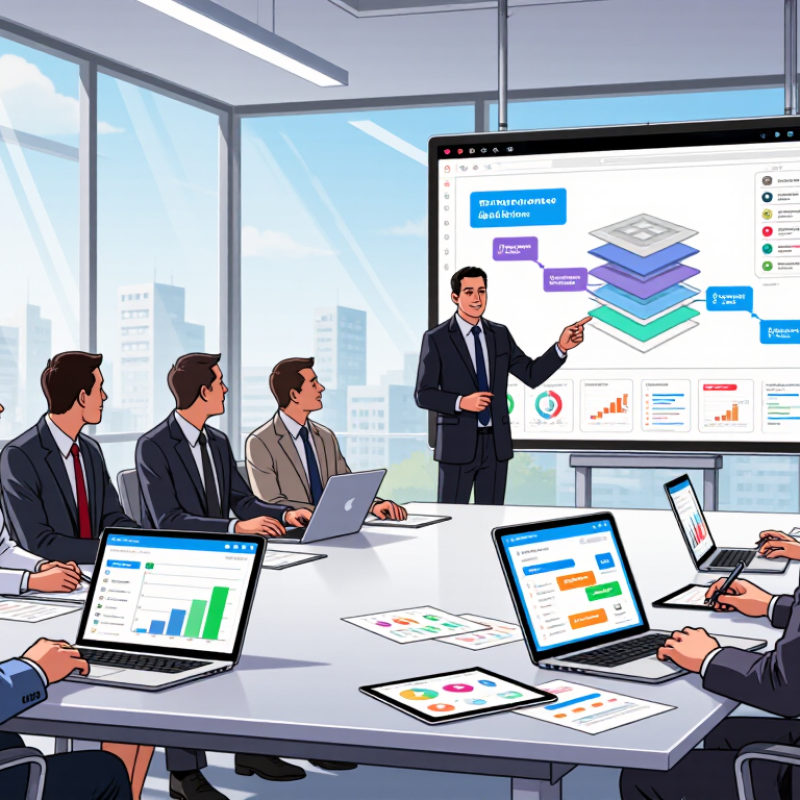
Definition and Scope of China’s Software System Suppliers
China’s software system suppliers are companies that design, develop, configure, or maintain software for business and public-sector use. The term covers more than packaged applications. It can include cloud platforms, on-premise systems, mobile tools, data services, and software connected to equipment or existing business systems.
Some suppliers create their own products. Others adapt software to a buyer’s workflows or provide engineering and integration services. The boundary is not always clear. A supplier may build one module, connect it to another provider’s platform, and handle updates afterward. Buyers should clarify who owns each task before signing an agreement. Scope matters.
A practical assessment looks at the full service cycle: requirements, testing, deployment, maintenance, and technical support. Ask for sample project plans, testing records, documentation, and realistic support response times. A polished demonstration alone cannot show how a system behaves with messy data or older internal tools. Small details matter. Buyers should also confirm how data is handled and where support responsibilities begin and end. No checklist removes every risk; requirements can change, and project assumptions sometimes prove wrong. Being clear about those uncertainties is part of choosing a supplier responsibly.
China Best Software System Suppliers for Global Buyers? - Definition and Scope of China’s Software System Suppliers
| Dimension | Definition or Scope | Typical Examples | What Global Buyers Can Evaluate |
|---|---|---|---|
| Supplier definition | A software system supplier designs, develops, configures, integrates, licenses, or supports software used to operate business processes or technical systems. The term describes a broad supplier category, not a single product type. | Software developers, system integrators, implementation partners, and providers of configurable software platforms. | Clarify whether the supplier owns the software, customizes third-party components, or mainly delivers implementation and support services. |
| Business applications | Systems that help organizations manage internal operations, information, and transactions. | Enterprise resource planning, customer relationship management, human resources, finance, supply chain, and workflow applications. | Check functional fit, localization, reporting, user roles, data migration, and integration with existing systems. |
| Industrial and operational systems | Software used to monitor, coordinate, or improve manufacturing and other operational processes. | Manufacturing execution, production planning, equipment monitoring, quality management, and industrial data platforms. | Assess compatibility with plant equipment, communication protocols, uptime needs, cybersecurity controls, and commissioning requirements. |
| Cloud and deployment options | Software may be delivered as a hosted service, installed in a customer-managed environment, or provided through a hybrid architecture. | Cloud-hosted applications, on-premises systems, and deployments combining local and cloud components. | Confirm hosting location, data access, backup and recovery arrangements, update responsibilities, and applicable data-transfer rules. |
| Customization and integration | Supplier work may range from configuration of standard features to custom development and connections with other systems. | APIs, data connectors, custom workflows, interface development, and migration services. | Review documented interfaces, source-code and change-control terms, testing procedures, and responsibility for future maintenance. |
| Implementation and support | Services commonly include requirements analysis, configuration, testing, deployment, training, maintenance, and technical support. | Project planning, user training, service desk support, upgrades, and incident resolution. | Agree on project milestones, acceptance criteria, support hours, response targets, escalation paths, and service continuity plans. |
| International readiness | Readiness for overseas projects depends on the product and delivery team; it should be verified for each target market. | Language options, regional date and currency formats, remote implementation, and locally appropriate documentation. | Request evidence of relevant market experience, language coverage, time-zone support, and the ability to meet local legal and technical requirements. |
| Security and compliance | Security and regulatory obligations vary by industry, deployment, data type, and the countries where a system is used or hosted. | Access controls, encryption, audit logs, vulnerability handling, privacy controls, and security documentation. | Verify controls and certifications directly, define data-processing responsibilities, and obtain legal advice on applicable jurisdiction-specific requirements. |
| Commercial and ownership terms | Contracts may cover license or subscription fees, implementation charges, maintenance, intellectual property, and permitted use. | Subscription, perpetual license, project-based delivery, and ongoing support agreements. | Confirm total cost, renewal terms, ownership of custom work, exit and data-export provisions, and remedies if agreed deliverables are not met. |
| Supplier due diligence | Supplier selection should be based on documented product capabilities and delivery evidence rather than country of origin alone. | Product demonstrations, reference checks, technical assessments, pilot projects, and written proposals. | Compare suppliers against the same requirements, validate claims with evidence, and use a pilot or acceptance test for critical workflows. |
Note: Supplier capabilities, certifications, service coverage, and regulatory suitability vary. Verify current details directly with each prospective supplier and qualified advisers.
Related Posts
-

How to Choose Technology Software for Global Buyers?
-

Top Software Applications for Global Buyers
-

China Top 10 Computer Software Companies for Global Buyers
-

How to Improve Your Software Engineering Skills for Global Success?
-

Top 10 Computer Programs for Global Buyers in 2026?
-

How to Choose the Right Software System for Your Business?


