Top Embedded Systems Innovations to Watch in 2025
As we look towards 2025, the landscape of embedded systems is poised for thrilling advancements that promise to redefine industries and enhance everyday life. According to Dr. Emily Chen, a leading expert in the field and a professor at the National Institute of Embedded Technologies, "The innovations in embedded systems will not only drive technological progress but also create unprecedented opportunities for integration in various sectors." This perspective underscores the pivotal role embedded systems will play in shaping the future, as they are essential components in modern devices ranging from consumer electronics to industrial automation.
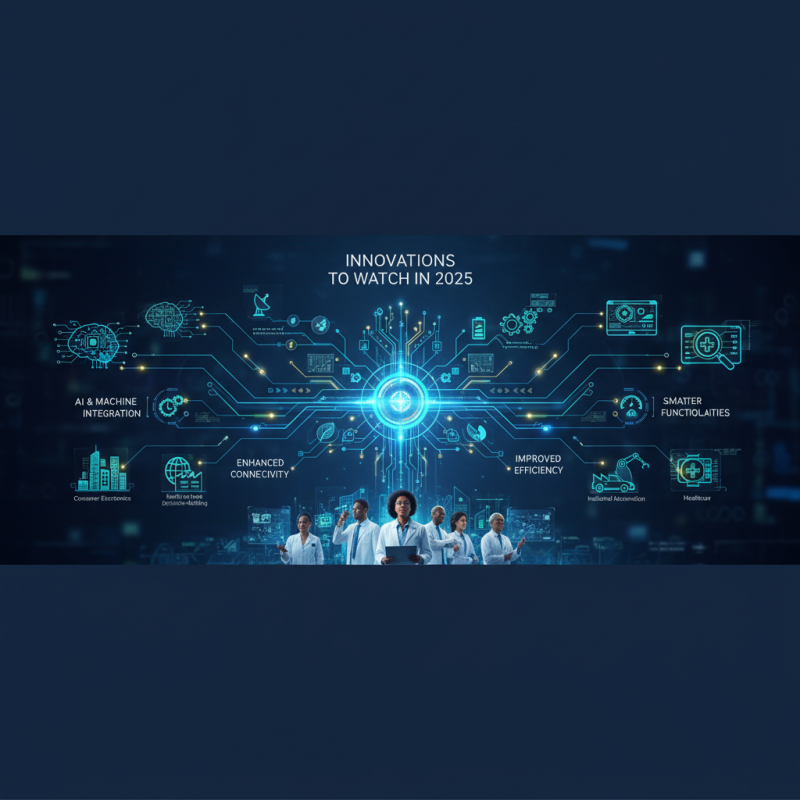
The upcoming innovations are expected to focus on enhanced connectivity, improved efficiency, and smarter functionalities. The integration of AI algorithms and machine learning within embedded systems will further enable real-time data processing and decision-making capabilities, facilitating seamless interactions across devices. As we delve into the top embedded systems innovations to watch in 2025, it becomes increasingly evident that these developments will significantly impact our daily lives and the global economy. With experts like Dr. Chen leading the charge, the future of embedded systems looks not only promising but also transformative.
Emerging Trends in Embedded Systems for 2025
As we look ahead to 2025, the field of embedded systems is poised for a transformative shift driven by several emerging trends. One of the most significant trends is the integration of artificial intelligence (AI) directly into embedded devices. This advancement enables systems to process data locally, allowing for real-time decision-making and increased efficiency. As AI algorithms improve and become more compact, we can expect a surge in smart devices across various industries, from healthcare to manufacturing, enhancing automation and predictive maintenance capabilities.
Another noteworthy trend is the growing focus on energy efficiency and sustainability in embedded systems. As the global emphasis on reducing carbon footprints intensifies, embedded devices will increasingly incorporate energy-harvesting technologies and low-power design principles. This shift not only aligns with environmental goals but also enhances the longevity and reliability of devices, particularly in remote and IoT applications where power sources may be limited.
Additionally, the rise of edge computing will further facilitate the processing of data at or near the source, minimizing latency and bandwidth use, while bolstering energy-efficient operations. These innovations will shape a more connected and responsive ecosystem, allowing for smarter solutions across diverse fields.
Advancements in AI and Machine Learning Integration
The integration of artificial intelligence (AI) and machine learning (ML) into embedded systems is poised to revolutionize various industries by 2025. With the global embedded systems market expected to reach $116 billion by 2025, as reported by research firms, the escalating demand for smarter devices necessitates the embedding of advanced algorithms within hardware. This synergy between AI/ML and embedded systems enables real-time data processing and decision-making at the edge, significantly enhancing the performance and efficiency of applications ranging from industrial automation to healthcare monitoring.
One of the most noteworthy advancements is the ability to perform complex computations locally, reducing latency and bandwidth use. For instance, embedded systems equipped with machine learning algorithms can now conduct predictive maintenance in manufacturing settings, decreasing downtime by up to 30%, as indicated in industry analyses. Moreover, the infusion of machine learning into consumer electronics allows for personalized user experiences; devices can learn from user interactions and optimize their functionality accordingly. By 2025, the drive towards autonomous systems supported by AI/ML integration will further underscore the importance of these technologies in shaping future embedded solutions, ultimately leading to smarter, more autonomous operations across numerous sectors.
Top Embedded Systems Innovations to Watch in 2025 - Advancements in AI and Machine Learning Integration
| Innovation Area |
Description |
Expected Impact |
Implementation Timeline |
| AI-Driven Predictive Maintenance |
Leveraging AI to predict equipment failures before they occur. |
Reduced downtime and maintenance costs. |
2025 |
| Edge Computing in IoT |
Processing data closer to the source to reduce latency. |
Improved real-time data analysis and decision making. |
2024-2025 |
| Smart Sensor Networks |
Using AI to enhance the functionality of sensor networks. |
Higher efficiency in monitoring and control systems. |
2025 |
| AI-Enhanced Robotics |
Integrating machine learning for autonomous decision making in robots. |
Increased autonomy and efficiency in robotic applications. |
2024-2025 |
| Adaptive Machine Learning Algorithms |
Developing algorithms that adapt based on user behavior. |
Personalized user experiences in embedded systems. |
2025 |
The Role of IoT in Embedded Systems Innovation
The Internet of Things (IoT) is transforming the landscape of embedded systems, propelling innovation to unprecedented heights.
By enabling devices to communicate and share data with each other, IoT fosters a new level of interactivity and intelligence in various applications.
This connectivity allows embedded systems to not only perform their designated functions but also to adapt and learn from user behavior and environmental changes.
As a result, we are witnessing a surge in applications ranging from smart home devices to advanced industrial automation systems that leverage real-time data analytics to optimize performance and efficiency.
Moreover, the integration of IoT into embedded systems is redefining the parameters of functionality and user experience.
With the advent of edge computing, more processing power is being localized within devices,
reducing latency and enhancing responsiveness. This decentralization is particularly significant for applications requiring immediate feedback,
such as autonomous vehicles and critical healthcare monitoring systems.
As the capabilities of embedded systems expand, the intricacies of IoT networks will increasingly dictate the trajectory of innovation,
paving the way for smarter, more capable systems in everyday life and industry by 2025.
Enhancements in Power Management and Energy Efficiency
As embedded systems continue to evolve, the demand for enhanced power management and energy efficiency is becoming increasingly critical. According to a recent report by MarketsandMarkets, the embedded systems market is projected to reach $171 billion by 2025, with energy efficiency being a primary driver of this growth. Innovations such as adaptive power management techniques and energy harvesting systems are setting new benchmarks in how embedded devices consume and manage energy. These advancements not only improve the lifespan of devices but also align with global efforts to reduce carbon footprints.
Tips for optimizing energy efficiency in embedded systems include implementing low-power modes and leveraging advanced algorithms for dynamic power scaling. Additionally, the integration of energy-efficient components, such as low-power microcontrollers and sensors, can significantly contribute to energy savings. A report by the International Energy Agency indicates that improving energy efficiency in embedded systems could reduce energy consumption by up to 30% in various applications.
As we move closer to 2025, the shift towards more efficient power management solutions will pave the way for smarter technology. Emerging trends highlight the importance of system-on-chip (SoC) designs, which consolidate various functions into a single chip, thereby minimizing power draw. Furthermore, the adoption of machine learning algorithms for predictive power management can optimize energy usage based on real-time data, enhancing overall system performance while minimizing waste.
Top Embedded Systems Innovations to Watch in 2025
This chart illustrates the anticipated improvements in power management and energy efficiency across various embedded systems applications by 2025. The data suggest a noticeable trend towards enhanced energy savings and optimization in these areas.
Future Applications of Embedded Systems across Industries
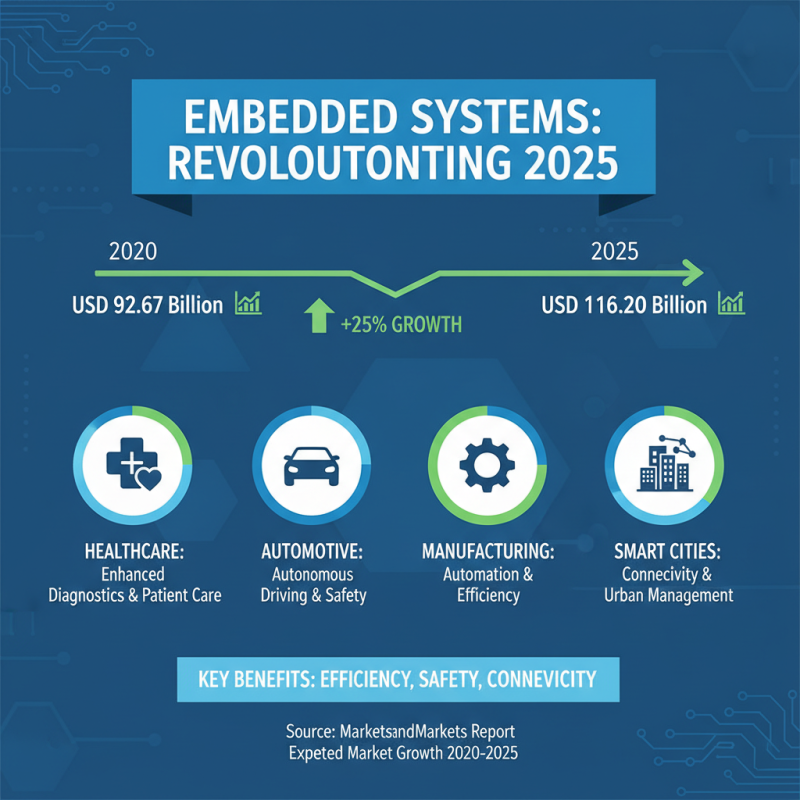
As we look towards 2025, the integration of embedded systems within various industries promises to revolutionize the way we live and work. These innovative technologies are set to enhance efficiency, safety, and connectivity across sectors such as healthcare, automotive, manufacturing, and smart cities. According to a recent report by MarketsandMarkets, the embedded system market is projected to grow from USD 92.67 billion in 2020 to USD 116.20 billion by 2025, highlighting the increasing reliance on these systems for diverse applications.
In healthcare, embedded systems are playing a critical role in the development of wearable medical devices that continuously monitor patient health. This not only empowers individuals to take charge of their wellbeing but also allows healthcare providers to collect real-time data, improving patient outcomes. A study published by Grand View Research indicates that the global wearable medical device market is expected to expand at a CAGR of 26.8% from 2021 to 2028, illustrating the burgeoning demand for such technologies.
**Tip:** To maximize the benefits of embedded systems in your industry, consider prioritizing interoperability among devices. This will allow for seamless data exchange and greater insights into operations, enhancing decision-making processes.
The automotive industry is also poised for transformation, with embedded systems driving advancements in autonomous vehicles and smart transportation solutions. The International Data Corporation (IDC) forecasts that by 2025, the transportation sector will see a significant shift towards smart mobility solutions, with embedded systems facilitating vehicle-to-everything (V2X) communication. This could lead to improved traffic management and reduced accidents.
**Tip:** Investing in robust cybersecurity measures is essential as embedded systems become more interconnected. This will help protect sensitive data and maintain the integrity of critical systems within an organization.