How to Get Started with Embedded Systems: A Beginner's Guide
Embedded systems represent a fascinating intersection of hardware and software, fundamentally shaping the devices we rely on every day. Dr. Jane Smith, a renowned expert in the field of embedded systems, once stated, "Embedded systems are the unsung heroes of modern technology, seamlessly integrating intelligence into the fabric of everyday objects." This statement underscores the critical role these systems play in a myriad of applications, ranging from consumer electronics to automotive control.
For beginners eager to delve into this dynamic field, understanding the core concepts and components of embedded systems is essential. From microcontrollers to operating systems designed for constrained environments, the journey can seem daunting yet rewarding. Through practical experimentation and learning, one can uncover the immense potential these systems hold, not only for personal projects but also for professional innovation. Each chapter of this guide is designed to equip you with foundational knowledge and skills needed to embark on your exploration of embedded systems, empowering you to transform your ideas into reality.
Understanding Embedded Systems: Definition and Core Concepts
Embedded systems are specialized computing systems that perform dedicated functions within a larger mechanical or electrical system. At their core, these systems consist of hardware and software designed to execute specific tasks efficiently and reliably. Unlike general-purpose computers, embedded systems are dedicated to particular applications, such as automotive controls, medical devices, and industrial machines. This focus on specific tasks allows embedded systems to be optimized for size, power consumption, and performance.
When starting your journey into embedded systems, it's essential to familiarize yourself with key concepts, such as microcontrollers, sensors, and actuators. Microcontrollers serve as the brain of many embedded systems, interfacing with other hardware components to perform operations. Understanding how these components work together will give you a solid foundation for your projects.
Tips: Start with simple projects using development boards that offer a variety of inputs and outputs. This hands-on approach will help reinforce your understanding of embedded concepts. Additionally, consider studying programming languages commonly used in embedded development, like C and C++, as they provide the necessary skills to manipulate hardware effectively. Remember to document your progress and challenges; this practice will enhance your learning experience and help you overcome obstacles in your projects.
Key Components of Embedded Systems: Microcontrollers and Sensors
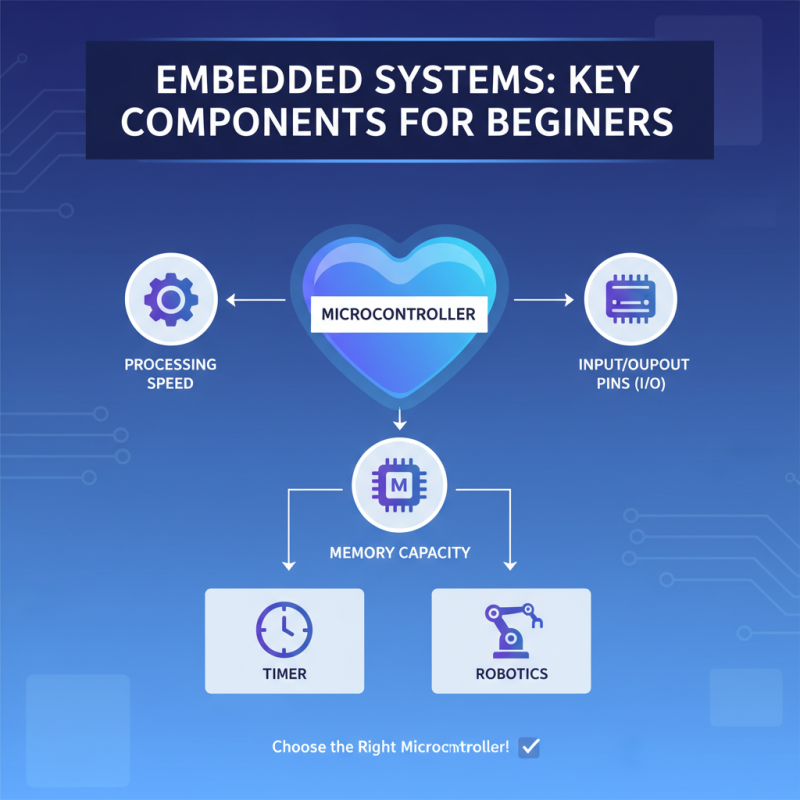
When diving into the world of embedded systems, understanding the key components is crucial for beginners. Microcontrollers serve as the heart of embedded systems, providing the processing power needed to execute tasks. These small, efficient processors can be programmed to perform specific functions, making them ideal for a variety of applications, from simple devices like timers to complex systems like robotics. Choosing the right microcontroller is essential; consider factors such as processing speed, memory capacity, and the availability of input/output pins to support your project needs.
Sensors, on the other hand, play a vital role in gathering information from the environment. They convert physical phenomena, like temperature, light, or motion, into electrical signals that can be easily interpreted by microcontrollers. With a wide array of sensor types available, it’s important to select those that best match the requirements of your application. For example, if your project involves monitoring environmental conditions, temperature and humidity sensors would be appropriate.
Tips: Always start with simple projects that incorporate a microcontroller and one or two sensors. This will allow you to grasp the basics without overwhelming complexity. Additionally, utilizing online resources and forums can provide you with valuable insights and troubleshooting support as you learn the ins and outs of embedded systems. Remember, experimentation is key—don't hesitate to tweak your designs and explore different configurations to achieve the results you want.
Popular Programming Languages for Embedded Systems Development
When diving into the world of embedded systems development, choosing the right programming language is crucial for building efficient and reliable applications. Among the popular languages, C stands out as the foundation for many embedded systems projects. Its low-level capabilities allow developers to directly manipulate hardware, making it an excellent choice for resource-constrained environments. The simplicity and efficiency of C enable developers to write fast and compact code, which is essential in embedded systems where memory and processing power are limited.
Another language gaining traction in this field is C++. Building upon the capabilities of C, C++ introduces object-oriented programming features which facilitate code organization and reusability. This is particularly beneficial in complex systems where modularity can significantly enhance maintainability. Additionally, languages such as Python and JavaScript are also found in certain embedded applications, primarily in higher-level development or when working with platforms that support them. These languages provide a more user-friendly approach and are often used for prototyping or for developing user interfaces in embedded applications.
Popular Programming Languages for Embedded Systems Development
Real-World Applications of Embedded Systems Across Industries
Embedded systems are integral to a wide array of industries, enhancing efficiency and performance through intelligent automation. According to a report by MarketsandMarkets, the global embedded systems market is projected to grow from $92.3 billion in 2020 to $116.2 billion by 2025, reflecting a compound annual growth rate (CAGR) of about 4.5%. This growth is largely driven by the increasing demand for smart consumer electronics, automotive systems, and industrial automation. For example, in the automotive sector, embedded systems are crucial for developing advanced driver-assistance systems (ADAS) and vehicle-to-everything (V2X) communications, significantly improving safety and driving experience.
In the healthcare industry, the application of embedded systems has revolutionized medical devices. Devices such as pacemakers, insulin pumps, and electronic health monitoring equipment rely on embedded systems to operate efficiently and safely. The World Health Organization highlights that the global telemedicine market, which heavily utilizes embedded technology, was valued at $50.4 billion in 2020 and is expected to grow to $185.6 billion by 2026. This rapid expansion underscores the crucial role of embedded systems in enhancing patient care through real-time monitoring and data collection, ultimately leading to better health outcomes.
Resources and Tools for Beginners: Kits, IDEs, and Online Courses
Getting started with embedded systems can be an exciting journey, especially for beginners eager to explore the world of electronics and programming. One of the first steps is to invest in a good starter kit that usually comes with essential components, such as microcontrollers, sensors, and breadboards. These kits provide a hands-on experience, allowing you to experiment with different circuits and understand the basic concepts of embedded systems.
When it comes to development environments, Integrated Development Environments (IDEs) play a crucial role. A user-friendly IDE can simplify the coding process, making it easier for beginners to write, debug, and upload code to their microcontrollers. Many IDEs come with built-in features like code suggestions and error highlights, which can significantly enhance your learning experience.
**Tip:** Don't hesitate to tap into online courses that focus on embedded systems. Many of these platforms offer structured lessons, practical projects, and community support, which can be invaluable for beginners. Engaging with forums and discussion groups can also provide additional insights and troubleshooting tips as you work through your projects.
How to Get Started with Embedded Systems: A Beginner's Guide - Resources and Tools for Beginners
| Resource Type |
Name |
Description |
Link |
| Development Kit |
Basic Embedded Kit |
A beginner-friendly kit with essential components for prototyping. |
View More |
| IDE |
SimpleIDE |
An integrated development environment designed for embedded system programming. |
View More |
| Online Course |
Introduction to Embedded Systems |
A comprehensive course covering the basics of embedded systems design. |
View More |
| Book |
The Definitive Guide to Embedded Systems |
A detailed book that explains the principles and applications of embedded systems. |
View More |
| Community Forum |
Embedded Systems Community |
A platform for beginners to ask questions and share knowledge. |
View More |