What Is Software Architecture and Why Does It Matter?
Software architecture is the set of important decisions that shape how a software system is built, operated, and changed. It defines major components, their responsibilities, communication paths, data flows, and technical boundaries. In practice, architecture appears in familiar details: an API gateway routing requests, a database storing customer records, or a service recovering after a network failure. These choices influence performance, security, reliability, development speed, and long-term cost.
It matters because every system carries consequences beyond its first release. A convenient shortcut today may create slower deployments, fragile integrations, or expensive maintenance later. Strong software architecture helps teams reason about these risks before they become production incidents. It also gives developers a shared language for making decisions and reviewing trade-offs. However, no architecture is perfect. A design that suits a small startup may burden a regulated enterprise, while an elegant diagram may ignore operational realities. Some architecture documents become outdated within months. That weakness deserves attention.
This article examines what software architecture includes and why experienced teams treat it as an ongoing practice rather than a one-time blueprint. It considers scalability, resilience, maintainability, and business alignment through practical examples. Reliable architectural decisions should connect technical evidence with real user needs, measurable constraints, and lessons from production experience. The goal is not to promote complexity. It is to understand when structure creates value, when simplicity is safer, and when a design needs honest revision.
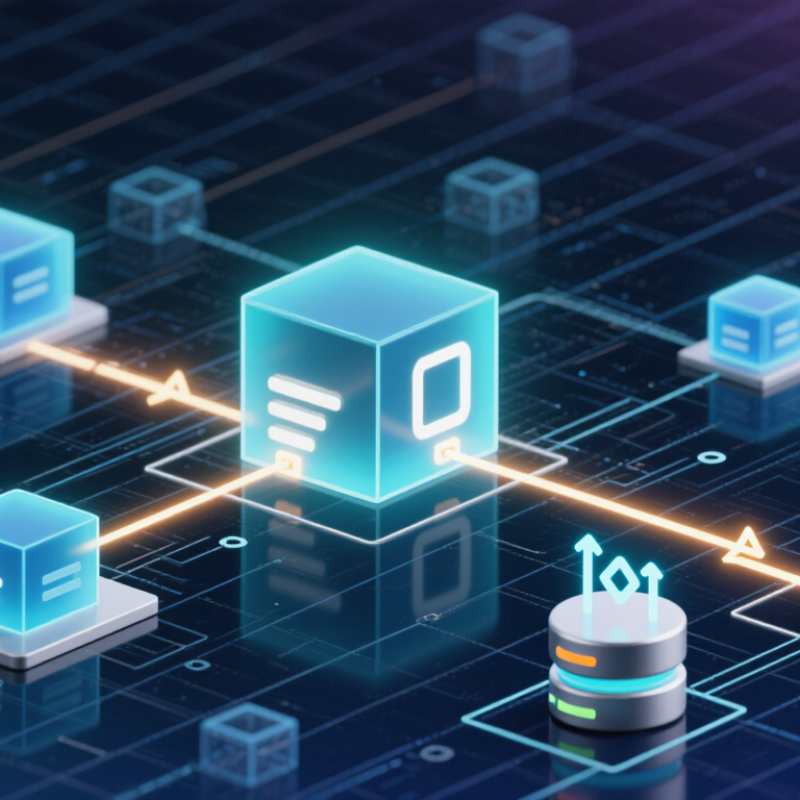
Defining Software Architecture and Its Core Principles
Software architecture is the structure behind a software system. It defines major components, their responsibilities, and how they communicate. It also records important technical decisions before coding becomes difficult to change. In practice, architecture is not a perfect blueprint. It is a set of deliberate choices shaped by business goals, user needs, risks, and available skills.
Core principles make those choices easier to evaluate. Separation of concerns keeps payment logic away from interface code. Modularity allows one service to change without disturbing every other part. Clear interfaces reduce confusion between teams. Architecture must also address quality attributes, including performance, security, reliability, and maintainability. These qualities often compete. Faster processing may require more infrastructure, while stronger security can add user friction. Good architects make these trade-offs visible and support them with evidence, tests, and operational experience. I have learned that a simple design often survives longer than an impressive one.
Tips: Draw the system before building it. Write down each major decision and its reason. Test risky assumptions with a small prototype. Review the design when requirements change. Do not treat diagrams as permanent truth. A useful architecture can evolve. My own designs have sometimes overestimated future growth and created needless complexity. That mistake remains valuable when teams measure real usage, question old assumptions, and remove structures that no longer help.
| Architecture Principle | Definition | Primary Design Decision | Typical Benefit | Measurable Indicator | Common Risk When Ignored | Impact Level |
|---|---|---|---|---|---|---|
| Separation of Concerns | Organize the system so that different responsibilities are handled by distinct components or layers. | Separate user interface, application logic, domain rules, and data access responsibilities. | Changes in one area are less likely to affect unrelated areas. | Lower change-impact scope and fewer cross-layer dependencies | Small feature changes require edits across many unrelated modules. | High |
| Modularity | Divide the system into cohesive modules with clearly defined responsibilities and interfaces. | Define module boundaries around business capabilities or stable technical responsibilities. | Improves maintainability, testing, reuse, and parallel development. | Module cohesion, dependency count, and percentage of independently testable components | Large, tightly coupled components become difficult to understand and replace. | High |
| High Cohesion | Ensure that the elements within a component are strongly related to one focused purpose. | Keep related data and behavior together while removing unrelated responsibilities. | Creates components that are easier to reason about and evolve. | Number of responsibilities per module and internal dependency density | Components become “god objects” with unclear ownership and excessive complexity. | High |
| Loose Coupling | Minimize direct dependencies and assumptions between components. | Use stable contracts, abstractions, and explicit data exchange between components. | Allows components to change, deploy, or scale with less coordination. | Inter-module dependency count and change propagation frequency | A change in one component triggers cascading failures or widespread retesting. | High |
| Abstraction | Expose essential behavior while hiding implementation details that should not be depended upon. | Define interfaces based on stable capabilities rather than internal data structures. | Reduces accidental dependencies and supports implementation replacement. | Interface stability and number of consumers dependent on internal details | Consumers become tied to implementation details, making refactoring expensive. | Medium |
| Explicit Contracts | Specify the inputs, outputs, errors, and behavioral expectations of a component or service. | Document schemas, validation rules, error semantics, and compatibility requirements. | Improves interoperability, debugging, and predictable integration. | Contract test coverage and backward-compatible interface percentage | Integration failures appear late because components interpret behavior differently. | High |
| Dependency Inversion | Make high-level policy depend on stable abstractions rather than concrete implementation details. | Place interfaces at architectural boundaries and inject implementation dependencies. | Improves testability and makes infrastructure components easier to replace. | Percentage of external dependencies isolated behind interfaces | Business logic becomes difficult to test and tightly bound to infrastructure. | Medium |
| Scalability | Enable the system to handle increased workload by adding resources or improving capacity. | Identify scaling dimensions such as users, requests, data volume, and processing time. | Maintains acceptable performance as demand grows. | Throughput, concurrent users, resource utilization, and scaling efficiency | Performance degrades sharply when traffic or data volume increases. | High |
| Resilience | Allow the system to continue operating or recover when components, networks, or dependencies fail. | Use timeouts, retries with limits, isolation, graceful degradation, and recovery procedures. | Reduces outage duration and limits the spread of failures. | Recovery time, failure rate, error budget consumption, and successful recovery percentage | One failed dependency causes a wider system outage. | High |
| Security by Design | Build confidentiality, integrity, authentication, authorization, and auditability into the architecture. | Define trust boundaries, access controls, data protection, and secure failure behavior early. | Reduces preventable vulnerabilities and limits the impact of security incidents. | Critical vulnerability count, access-control test coverage, and audit-log completeness | Security weaknesses are discovered late and require expensive structural changes. | High |
| Observability | Make internal system behavior understandable through logs, metrics, traces, and meaningful health signals. | Define diagnostic signals for critical workflows, dependencies, and failure conditions. | Shortens incident detection and troubleshooting time. | Mean time to detect, mean time to restore, and critical-path monitoring coverage | Failures remain invisible or require lengthy manual investigation. | High |
| Performance Efficiency | Use computational, storage, and network resources effectively while meeting user requirements. | Set response-time targets, capacity limits, caching rules, and workload priorities. | Provides faster user interactions and more predictable operating costs. | Latency percentiles, throughput, queue time, and resource cost per transaction | Slow responses, resource saturation, and unstable behavior under peak load. | Medium |
| Evolvability | Enable the architecture to accommodate new requirements without disproportionate rework. | Separate stable decisions from volatile decisions and record important trade-offs. | Reduces long-term maintenance cost and supports continuous improvement. | Lead time for change, architectural rework percentage, and technical-debt trend | The system becomes resistant to change and accumulates architectural debt. | High |
Related Posts
-

2026 Best Software Design Trends for Global Buyers?
-

2026 How to Choose the Best Software for Your Computer?
-

China Best Software Application for Global Buyers?
-

10 Best Customization Software Solutions for Your Business Needs in 2023
-

2026 How to Choose the Best To Do Software for Your Daily Tasks?
-

Top 10 Software Technology Trends Every Global Buyer Should Know?


