What is Software Engineering and Why is it Critical for Modern Development
In the rapidly evolving digital landscape, software engineering has emerged as a cornerstone of modern development practices, shaping how applications are designed, built, and maintained. According to the Bureau of Labor Statistics, employment in software development is projected to grow by 22% from 2020 to 2030, far exceeding the average growth rate for all occupations. This exponential demand underscores the critical role that software engineering plays in driving innovation and efficiency across various industries, from finance to healthcare.
The increasing reliance on sophisticated software solutions highlights the necessity for robust software engineering methodologies to ensure quality, scalability, and security. A report from McKinsey indicates that organizations adopting agile software practices are 1.5 times more likely to achieve higher project success rates compared to their traditional counterparts. This trend illustrates not only the value of effective software engineering but also the need for continuous adaptation and learning to meet evolving consumer expectations and technological advancements.
In conclusion, software engineering is not merely a technical discipline; it represents a fundamental aspect of modern business strategy and operational excellence. As organizations strive to harness the full potential of evolving technologies, the mastery of software engineering principles will be pivotal in crafting solutions that not only meet current demands but also anticipate future challenges.

What is Software Engineering: Definition and Scope
Software engineering is a systematic approach to developing, operating, and maintaining software. It encompasses a variety of methodologies and principles aimed at enhancing the efficiency and reliability of software products. The discipline integrates concepts from computer science, project management, and engineering to ensure that software systems are robust, scalable, and fit for their intended purposes. At its core, software engineering focuses on applying engineering principles to software creation and emphasizes the importance of adhering to precise specifications and rigorous testing to minimize bugs and optimize performance.
The scope of software engineering is broad, covering numerous aspects of software development, from initial requirements gathering and system design to implementation, testing, and maintenance. It involves various stages, including analysis, design, coding, and deployment, ensuring that quality is maintained throughout the software lifecycle. Software engineering also encompasses specialized areas such as web development, mobile application development, and software architecture, adapting to evolving technology and user needs. By integrating best practices and methodologies, software engineering not only facilitates the development of complex systems but also addresses challenges related to project management, scalability, and maintaining high-quality user experiences in today’s fast-paced digital environment.
Key Principles of Software Engineering in Modern Development
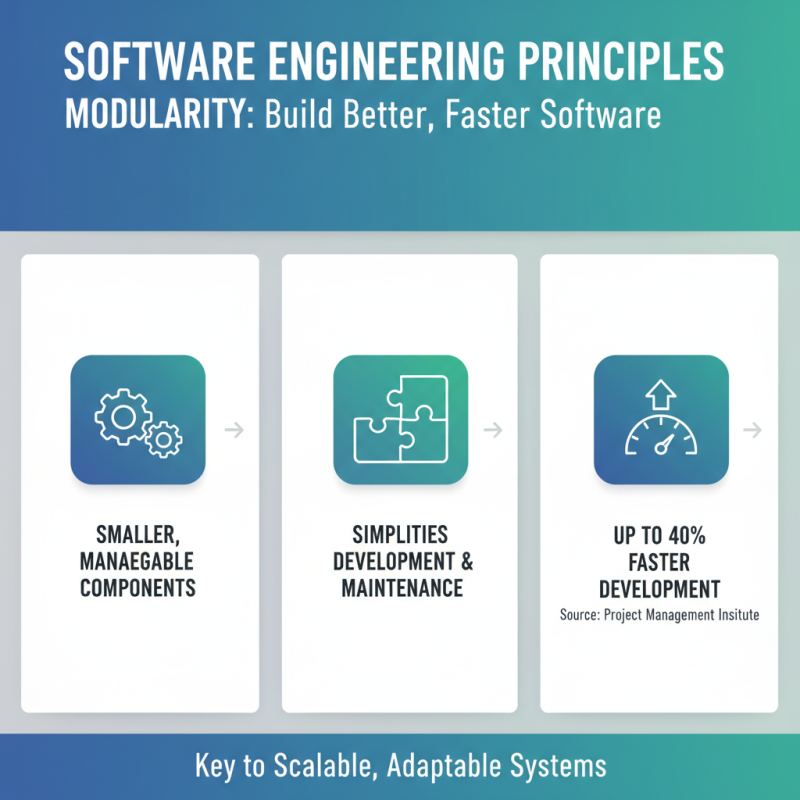
Software engineering is a discipline that encompasses a wide array of principles essential for creating high-quality software that meets user needs and business goals. One of the key principles is modularity, which encourages dividing a system into smaller, manageable components or modules. This approach not only simplifies development and maintenance but also enhances the ability to scale and adapt systems quickly. According to a report by the Project Management Institute, projects that focus on modular design can increase development speed by up to 40%, significantly reducing time to market.
Another critical principle is iterative development, which focuses on building software incrementally and incorporating feedback at every stage. This approach is supported by the Agile methodology, which emphasizes collaboration and flexibility. A study from the Standish Group revealed that Agile projects are three times more likely to succeed than traditional waterfall projects. By continually refining requirements and leveraging user feedback, teams can ensure that the end product closely aligns with user expectations and market demands. The combination of modularity and iterative development not only streamlines workflows but also fosters innovation, making software engineering crucial in today’s fast-paced digital landscape.
The Role of Software Engineering in Enhancing Product Quality
Software engineering plays a pivotal role in enhancing product quality, impacting everything from user satisfaction to system reliability. By applying engineering principles, software engineers can design, implement, and maintain software systems that not only meet functional requirements but also exhibit high levels of performance, security, and usability. Rigorous testing and quality assurance practices are essential components of the software engineering process. They help identify and rectify defects early in the development cycle, leading to more robust and dependable software products.
Tips: Incorporating automated testing frameworks can streamline the testing process, allowing teams to quickly identify issues and ensure that any code changes do not introduce new defects. Additionally, fostering a culture of continuous feedback among developers through regular code reviews can significantly raise the standard of code quality.
Moreover, a well-structured software engineering process facilitates better collaboration among team members and stakeholders, ensuring that the product evolves in line with user needs and industry standards. Implementing methodologies such as Agile or DevOps can enhance this collaborative environment, allowing teams to adapt quickly to changes and continuously improve the product based on user feedback.
Tips: Establishing clear communication channels within the team helps to align everyone on project goals. Utilizing project management tools can further enhance visibility and accountability, ensuring that all team members are on the same page regarding timelines and deliverables.
Industry Statistics: Software Failure Rates and the Need for Engineering
In recent years, the software industry has witnessed alarming statistics regarding the failure rates of software projects. Research indicates that approximately 70-80% of software projects fail to meet their objectives, whether that means they are not delivered on time, do not adhere to budget constraints, or fail to satisfy user requirements. A report from the Standish Group highlights that only about 29% of projects are completed on time and within budget, while a staggering 51% of projects are deemed "challenged," facing significant obstacles that may lead to their eventual failure. These figures underscore the critical need for robust software engineering practices in modern development.
The high failure rates illuminate the necessity of employing skilled software engineers who are well-versed in best practices and methodologies such as Agile, DevOps, and continuous integration. According to the Project Management Institute, organizations that prioritize good project management and rigorous engineering standards can increase their project success rates by an estimated 30%. Additionally, a survey conducted by the Chaos Report emphasizes that improving requirement gathering and stakeholder engagement can mitigate risks and significantly enhance end-user satisfaction. As businesses increasingly rely on software solutions, adopting a structured engineering approach is more important than ever to ensure the delivery of high-quality software that meets the evolving needs of users.
What is Software Engineering and Why is it Critical for Modern Development
| Metric |
Value |
| Average Software Project Failure Rate |
30% - 50% |
| Cost Overrun of Software Projects |
20% - 40% |
| Time Delay in Software Development |
30% - 70% |
| Percentage of Bugs Found After Release |
60% - 80% |
| Estimated Cost of Poor Software Quality |
$300 billion annually |
| Adoption Rate of Agile Methodologies |
71% |
The Future of Software Engineering: Trends and Emerging Technologies
The future of software engineering is poised for transformative change, driven by a confluence of trends and emerging technologies. One significant trend is the rise of artificial intelligence (AI) and machine learning in software development processes. According to a report by McKinsey, organizations that effectively use AI can enhance their productivity by up to 40%, revolutionizing traditional practices. These technologies are enabling developers to automate mundane tasks, leading to faster iterations and improved code quality, as AI tools assist in testing, debugging, and optimizing applications.
Another critical trend is the shift towards cloud-native development. Research from Gartner indicates that by 2025, over 85% of organizations will have adopted cloud-first principles, optimizing resource allocation and scalability. Cloud-native architectures, including microservices and containerization, allow for greater flexibility and collaboration among development teams. This shift not only enhances deployment speed but also aligns with the need for continuous integration and delivery (CI/CD) pipelines, making software development more adaptable to evolving business requirements.
Furthermore, the increasing importance of cybersecurity in software engineering cannot be overlooked. The rise in cyber threats has resulted in organizations prioritizing secure software development practices. According to the Cybersecurity and Infrastructure Security Agency (CISA), a staggering 68% of business leaders feel that their cybersecurity risks are increasing. This has led to the integration of security measures within the software development lifecycle, commonly referred to as DevSecOps, ensuring that security is a fundamental aspect of software design and implementation from the outset. As these trends evolve, software engineering will continue to be critical in shaping a secure, efficient, and innovative technological landscape.