How to Understand Embedded Systems for Beginners and Its Applications
Embedded systems have become a cornerstone of modern technology, permeating various industries and enhancing everyday devices. According to Dr. Jane Smith, a renowned expert in the field, "Understanding embedded systems is crucial for anyone looking to innovate in technology today." This statement emphasizes the importance of grasping the fundamentals of embedded systems for both beginners and experienced professionals alike.
As we delve into the world of embedded systems, it is essential to recognize their applications across different domains, from consumer electronics to automotive systems. Embedded systems are vital in managing functions in devices such as smartphones, medical equipment, and smart home devices. They operate silently in the background, enabling seamless interactions and increasing the efficiency of our daily activities.
For beginners aiming to understand embedded systems, it is important to explore the components, architecture, and programming aspects that define these systems. By grasping these foundational concepts, individuals can not only enhance their technical skills but also contribute to the ongoing innovations that shape our technological landscape. Hence, the journey of learning about embedded systems opens up numerous opportunities for creativity and advancement in the technology sector.

Understanding the Basics of Embedded Systems: Key Concepts for Beginners
Embedded systems are specialized computing systems designed to perform dedicated functions within larger mechanical or electrical systems. Unlike general-purpose computers, embedded systems are optimized for specific tasks, making them critical in various applications such as home appliances, automotive systems, medical devices, and industrial automation. For beginners, understanding the fundamental concepts of embedded systems is essential to grasp their functionality and potential uses.
One key concept to comprehend is the hardware-software interaction in embedded systems. Typically, these systems consist of microcontrollers or processors, memory units, and input/output interfaces. The software, often referred to as firmware, controls the hardware and allows the embedded system to interact with its environment. Beginners should familiarize themselves with programming languages commonly used in embedded development, such as C and Python, as they play a crucial role in defining system behavior.
**Tips:** Start by experimenting with simple projects using development boards like Arduino or Raspberry Pi. These platforms provide an accessible entry point for understanding how embedded systems function. Additionally, consider joining online communities or forums where you can connect with experienced developers, ask questions, and share your progress. Embracing practical experience alongside theoretical knowledge will enhance your understanding and skills in embedded systems.
How to Understand Embedded Systems for Beginners and Its Applications
| Key Concept |
Description |
Application |
| Microcontroller |
A compact integrated circuit designed to govern a specific operation in an embedded system. |
Home automation systems |
| Sensors |
Devices that detect and respond to physical stimuli, such as light, heat, pressure, or motion. |
Smartphones |
| Actuators |
Components responsible for moving or controlling a mechanism or system. |
Robotics |
| Real-time Operating System (RTOS) |
An operating system that manages hardware resources and provides predictable timing for task execution. |
Automotive systems |
| Firmware |
Low-level software that directly interacts with hardware components. |
Consumer electronics |
Core Components of Embedded Systems: Microcontrollers, Sensors, and Actuators
Embedded systems are integral to various modern technologies, primarily consisting of three core components:
microcontrollers,
sensors, and
actuators.
Microcontrollers serve as the brain of an embedded system, executing instructions and processing data from the environment.
These compact computing devices integrate memory, input/output ports, and a processor, enabling them to perform specific control tasks efficiently.
Due to their low power consumption and cost-effectiveness, microcontrollers are widely used in applications like consumer electronics, automotive systems, and industrial machinery.
Sensors and actuators complement microcontrollers by facilitating interaction with the physical world.
Sensors convert physical phenomena, such as temperature, light, and pressure, into electrical signals that the microcontroller can read.
This allows the system to gauge environmental conditions and react appropriately.
Actuators, on the other hand, are responsible for executing actions based on the microcontroller's commands, such as moving motors or controlling valves.
Together, these components form a cohesive unit, enabling embedded systems to perform complex tasks across diverse fields, from home automation to robotics, effectively bridging the gap between the digital and physical realms.
Applications of Embedded Systems in Consumer Electronics and Automobiles
Embedded systems play a crucial role in modern consumer electronics and automobiles, significantly enhancing functionality and user experience. In consumer electronics, these systems are integrated into various devices such as smartphones, smart TVs, and kitchen appliances. They enable features like touch control, smart connectivity, and energy management. For instance, a smart thermostat uses embedded systems to learn user preferences and optimize heating and cooling schedules, resulting in increased comfort and energy efficiency.
In the automotive sector, embedded systems are essential for the functionality of safety features, navigation systems, and engine control units. Advanced driver-assistance systems (ADAS), which leverage numerous sensors and cameras, rely on embedded systems to process data in real-time, ensuring safer driving experiences. Moreover, these systems facilitate automotive innovations such as electric vehicle management and autonomous driving technologies. By enabling vehicle-to-everything (V2X) communication, embedded systems contribute to the development of smarter transportation systems, enhancing road safety and efficiency.
The Role of Real-Time Operating Systems in Embedded Systems Functionality
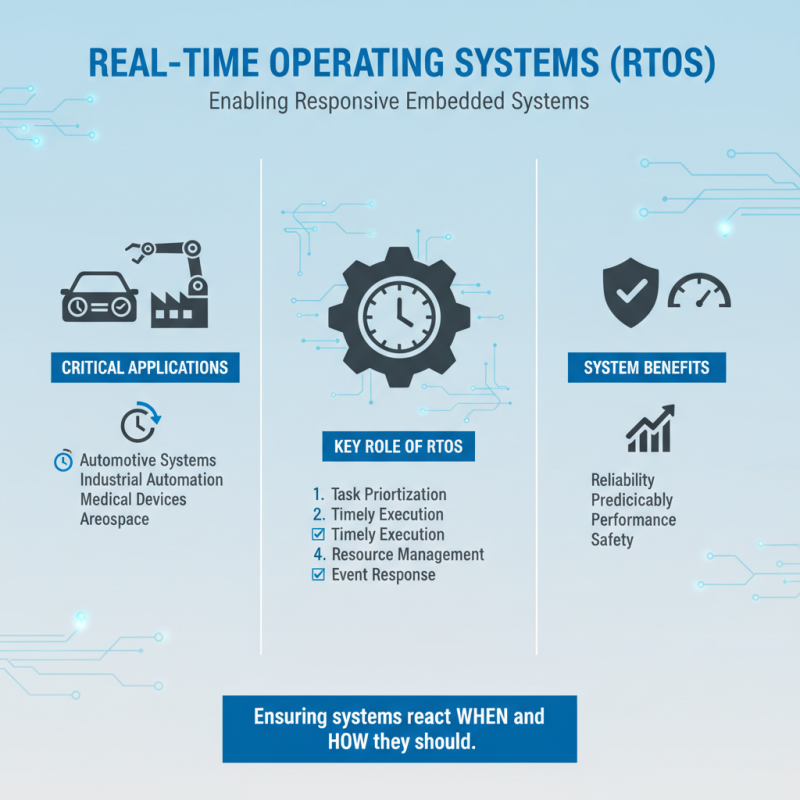
Real-time operating systems (RTOS) play a critical role in the functionality of embedded systems, providing the necessary framework to manage hardware resources and execute tasks efficiently. In applications where timing is paramount, such as in automotive systems or industrial automation, an RTOS guarantees that critical tasks are executed in a timely manner. This ability to prioritize tasks based on urgency and importance ensures that an embedded system can respond to external events swiftly, which is essential for maintaining system reliability and performance.
Moreover, an RTOS not only streamlines task management but also enhances resource utilization within embedded systems. By allowing multiple tasks to run concurrently while ensuring that system resources such as memory and processing power are optimally allocated, RTOS enables developers to build more complex and feature-rich applications. In areas such as medical devices and aerospace, where precision and functionality are mandatory, the use of an RTOS provides a solid foundation for developing systems that are both responsive and robust, ultimately leading to improved safety and effectiveness in critical applications.
Future Trends and Innovations in Embedded Systems: Data from Industry Reports
Embedded systems are becoming increasingly crucial across various industries, driving innovations and advancements. Recent industry reports highlight several key trends that indicate the future trajectory of embedded systems. One notable trend is the integration of artificial intelligence (AI) and machine learning (ML) into embedded devices. This integration allows for smarter automation and real-time decision-making capabilities, enhancing performance across applications such as smart homes, healthcare devices, and automotive systems.
Another significant trend is the rise of Internet of Things (IoT) applications, which leverage embedded systems to connect devices and monitor data seamlessly. As more devices become interconnected, the demand for efficient, low-power microcontrollers and sensors has surged. Industry projections suggest that the market for IoT-enabled embedded systems will continue to grow exponentially, leading to greater innovation in areas such as smart cities, industrial automation, and environmental monitoring.
Furthermore, sustainability is becoming a central focus within the embedded systems domain. Developers are exploring energy-efficient designs and sustainable materials, responding to a growing awareness of environmental impact. Industry reports forecast that future embedded systems will prioritize energy management and eco-friendly technologies, ensuring that advancements in this field are not only innovative but also responsible. This shift towards sustainability represents a critical evolution in the way embedded systems are designed and deployed, reflecting broader societal values.