Why Understanding Software Architecture is Crucial for Successful Development
In the ever-evolving landscape of software development, the significance of understanding software architecture cannot be overstated. This foundational aspect shapes not only the structure and design of applications but also determines the long-term success and scalability of software projects. As renowned software architect Mary Poppendieck aptly stated, "Software architecture is the skeleton that supports and defines the entire system." Her insight highlights the critical role that software architecture plays in ensuring that development teams can deliver robust and efficient solutions.
A well-defined software architecture serves as a blueprint, guiding developers through the complexities of implementation while allowing for adaptability and evolution over time. It facilitates better communication among team members and establishes a common understanding of the system's components, interactions, and constraints. Moreover, with the increasing emphasis on agile methodologies and rapid development cycles, the importance of a solid architectural foundation becomes even more pronounced, as it allows teams to pivot and innovate without sacrificing quality or performance.
Ultimately, grasping the principles of software architecture is crucial for any organization aiming to excel in the competitive tech industry. By investing time and effort into understanding this discipline, development teams can avoid common pitfalls, enhance collaboration, and ensure that their software systems are built to withstand the test of time.

Importance of Software Architecture in Development Process Efficiency
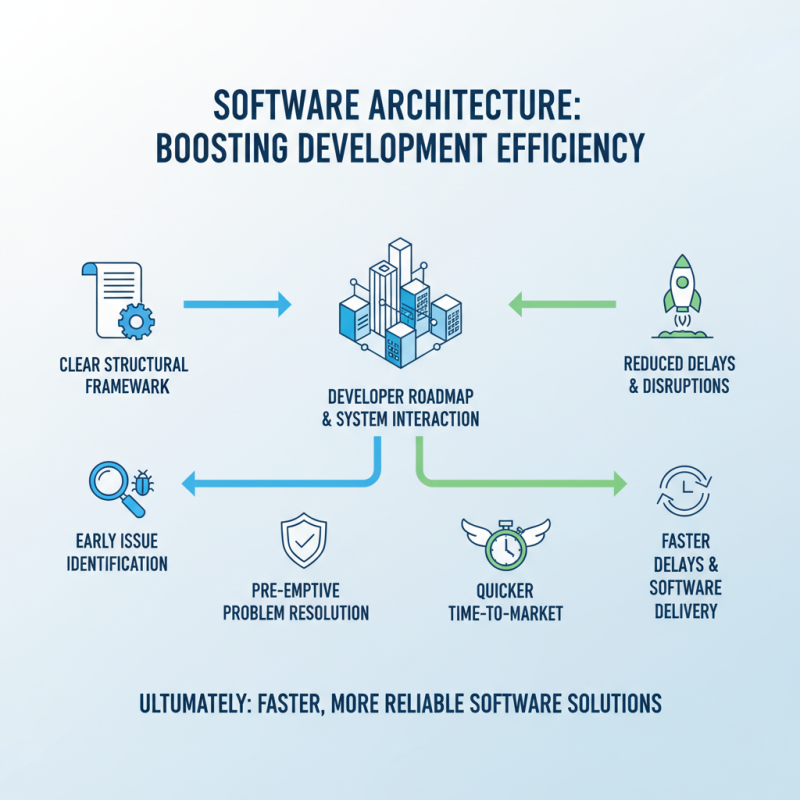
Software architecture plays a pivotal role in enhancing the efficiency of the development process. By establishing a clear structural framework, it provides a roadmap for developers, enabling them to understand the interactions and relationships between various components of a system. This clarity helps in identifying potential issues early in the development cycle, ensuring that teams can address them before they escalate into significant problems. As a result, projects can progress more smoothly, with fewer delays and disruptions, ultimately leading to quicker time-to-market for software solutions.
Moreover, a solid architectural foundation allows for better resource allocation and team collaboration. With a well-defined architecture, developers can work on different components simultaneously, promoting parallel development and reducing bottlenecks. This division of labor not only accelerates the development timeline but also enhances the overall quality of the final product. Teams can also leverage existing architectural patterns and best practices, which further streamlines the development process and minimizes the risk of reinventing the wheel. Thus, a well-articulated software architecture is essential for maximizing efficiency and fostering a collaborative environment among development teams.
Impact of Software Architecture on Project Budget and Resource Allocation
Software architecture plays a pivotal role in determining the budget and resource allocation for a development project. A well-defined architecture lays the groundwork for efficient collaboration among team members, reducing the risk of miscommunication and minimizing resource wastage. When developers work within a coherent architectural framework, they can identify dependencies early in the process, allowing for a more accurate estimate of necessary resources and associated costs. This foresight in planning can lead to a more streamlined development process, ultimately resulting in savings in both time and money.
Moreover, the choice of software architecture significantly influences long-term maintenance and scalability, which can further impact project budgets. A robust architecture accommodates future changes and enhancements without necessitating a complete overhaul, ensuring that additional costs are kept in check. By investing in a solid architectural foundation from the outset, organizations can prevent potential design flaws that could become expensive to resolve later. Therefore, understanding and implementing effective software architecture is essential for optimizing budgetary considerations and ensuring judicious resource allocation throughout the project lifecycle.
Impact of Software Architecture on Project Budget and Resource Allocation
This chart illustrates the correlation between the architectural complexity of software projects and their associated budget. As project complexity increases, so does the budget allocation, demonstrating the importance of understanding software architecture for efficient resource management.
How Software Architecture Influences Team Collaboration and Communication
Effective software architecture serves as a blueprint for both the system and the development team, making it a cornerstone of successful collaboration and communication. When the architecture is well-defined, it provides a clear structure that aligns team members around shared goals and responsibilities. This clarity ensures that each team member understands their role in the larger context of the project, fostering a sense of ownership and accountability.
Furthermore, a well-architected system enables team members to identify dependencies and potential bottlenecks early in the development process, which can streamline workflows and enhance productivity.
Moreover, software architecture plays a vital role in facilitating effective communication among team members. By employing a common architectural framework, team members can discuss their ideas and problems in a shared vocabulary, reducing misunderstandings and misalignments.
Regular architecture reviews and discussions can further ensure that all voices are heard, promoting a collaborative environment where innovative solutions can flourish. This enhanced communication not only helps in mitigating risks but also encourages cross-functional teamwork, ultimately leading to a more cohesive and resilient project outcome.
Role of Software Architecture in Enhancing System Scalability and Maintainability
Software architecture serves as the backbone of any application, significantly influencing its scalability and maintainability. A well-designed architecture allows developers to create systems that can efficiently manage increasing loads and user demands without compromising performance. By employing architectural patterns that support modularity and separation of concerns, teams can scale the application both vertically and horizontally. This means they can add resources to handle more tasks or distribute workload across multiple servers, ultimately leading to a more robust system capable of growing alongside business needs.
Additionally, maintainability is heavily reliant on the software architecture's structure. Good architectural design facilitates easier updates and bug fixes, as components are decoupled and clearly defined. When changes are needed, a well-architected system allows developers to address specific modules without affecting the entire application. This minimizes downtime and reduces the risk of introducing new issues, promoting a smoother development process. In summary, understanding and applying effective software architecture not only enhances scalability but also ensures that systems can adapt and evolve efficiently over time.
Case Studies: Successful Projects Driven by Strong Software Architecture Principles
A strong software architecture serves as the backbone for successful development projects, influencing not only the immediate function of the application but also its overall lifespan and adaptability. One evident case of this is the development of a large-scale e-commerce platform. By leveraging solid architectural principles, the development team was able to implement microservices that allowed various features, such as inventory management and user accounts, to scale independently. This modular approach not only facilitated rapid deployments but also enabled the team to quickly address issues without affecting the entire system, ultimately resulting in enhanced user experiences and increased sales.
Another illustrative example can be observed in a healthcare management system designed for a major hospital network. By prioritizing a robust architecture that integrated various stakeholders—from doctors to patients—the development team ensured compliance with regulatory standards while maintaining flexibility for future updates. The use of domain-driven design principles allowed the system to evolve in response to changing healthcare protocols, significantly reducing costs associated with potential rewrites or integrations and ultimately leading to improved patient outcomes and streamlined operations. Through these case studies, it becomes evident that a well-thought-out software architecture is not merely an option but a necessity for driving successful projects.
Why Understanding Software Architecture is Crucial for Successful Development - Case Studies: Successful Projects Driven by Strong Software Architecture Principles
| Project Name |
Architecture Style |
Key Technologies Used |
Challenges Overcome |
Outcome |
| Project A |
Microservices |
Docker, Kubernetes, Node.js |
High scalability, frequent deployment |
Improved deployment speed by 50% |
| Project B |
Monolithic |
Java, Spring Boot, PostgreSQL |
Integration issues, performance bottlenecks |
System stability improved, 30% performance increase |
| Project C |
Event-Driven |
Kafka, AWS Lambda, Python |
Real-time data processing |
Achieved real-time analytics capability |
| Project D |
Serverless |
AWS, Azure Functions, React |
Scaling during traffic spikes |
Cost reduced by 40% with reliable scaling |